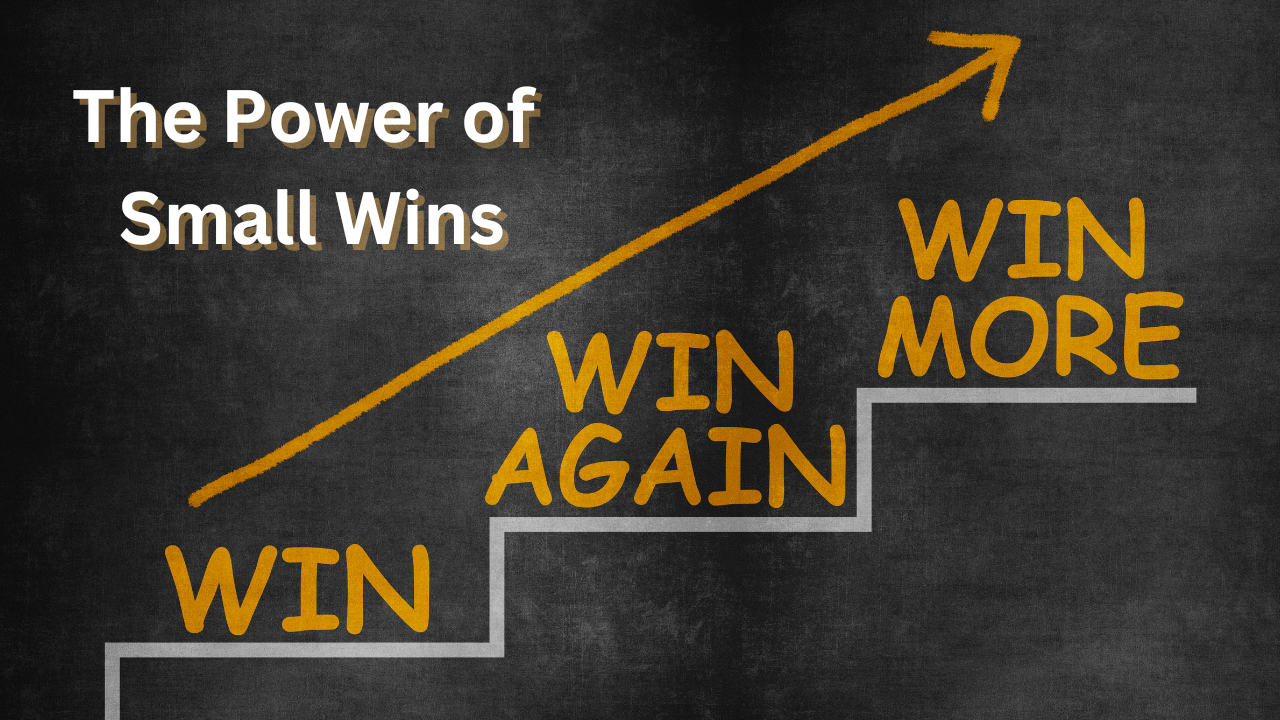
Small Wins Create a Positive Feedback Loop
Big goals get most of the attention. They look impressive on vision boards, sound exciting in conversations, and give us a clear picture of the future. Yet the moments that keep us moving are usually much smaller. Finishing one workout, saving the first fifty dollars, organizing one drawer, or completing a difficult phone call may not seem life changing, but each action provides evidence that progress is possible.
Small wins are especially useful when a goal involves complicated details or a long timeline. Someone improving their finances, for example, might begin by learning the meaning of a loan grace period in finance, checking an account balance, or setting one payment reminder. None of these actions solves every financial problem, but each one reduces confusion and makes the next decision easier. Progress often begins when a person replaces one large, intimidating problem with one manageable action.
The real value of a small win is not limited to the task that was completed. Recognizing progress can influence how you feel about the next task. Success creates a sense of movement, movement strengthens motivation, and motivation increases the chance that you will continue. Over time, this process becomes a positive feedback loop in which effort produces progress and progress encourages more effort.
Your Brain Notices Evidence of Progress
Motivation is often treated like a personality trait. We describe some people as naturally driven and others as easily distracted. In reality, motivation can change depending on the signals a person receives from an activity.
When effort seems pointless, the brain has little reason to continue investing energy. When effort produces a visible result, the activity starts to feel more valuable. Dopamine, a neurotransmitter involved in reward, learning, and motivation, plays a role in how the brain evaluates effort and possible rewards. Research highlighted by the National Institutes of Health on dopamine and cognitive effort suggests that dopamine can influence how much weight people give to the benefits of completing a difficult task.
This does not mean every checked box causes a dramatic burst of happiness. The process is more practical than that. A completed step tells your brain that effort can lead somewhere useful. That information makes another step feel more reasonable.
The win becomes proof. You are no longer acting only because you hope the plan might work. You now have evidence that you can begin, follow through, and create a result.
Small Wins Make Large Goals Feel Real
A large goal can be inspiring from a distance but overwhelming up close. Saving for a home, writing a book, changing careers, or improving your health may require months or years of effort. When the finish line is far away, daily work can feel disconnected from the final reward.
Small milestones shorten that emotional distance.
A person writing a book may celebrate completing the first page, finishing a chapter outline, or reaching a weekly word target. A person building savings may recognize the first automatic deposit, the first month without using a credit card, or the first unexpected expense covered with cash.
These milestones turn an abstract ambition into a series of visible events. Instead of asking, “Can I really accomplish this enormous goal?” you begin asking, “Can I complete the next useful step?”
That question is much easier to answer. Every yes builds momentum.
Celebration Is Not the Same as Complacency
Some people hesitate to celebrate small wins because they worry that satisfaction will reduce their ambition. They believe they should remain dissatisfied until the entire goal is complete.
That approach can create constant pressure without providing emotional recovery. If nothing counts until the final result arrives, months of meaningful progress may feel like failure.
Celebrating a small win does not mean declaring the work finished. It means noticing that your effort produced movement. You can appreciate progress and remain committed to the next step.
The celebration also does not need to be expensive or dramatic. You might write the achievement in a journal, tell a supportive friend, take a relaxing break, or simply pause for a moment and acknowledge what you completed.
The purpose is to make progress visible. When you immediately rush from one task to another, your brain may remember only the unfinished work. Pausing helps you record the fact that something went well.
Progress Can Change Your Identity
One of the most powerful effects of small wins is the way they influence how you see yourself.
At the beginning of a goal, you may describe yourself according to past behavior. You might say that you are bad with money, unable to stay organized, or someone who never finishes projects. These labels can make change feel unnatural.
Small wins provide evidence against those old descriptions.
When you save money three pay periods in a row, you have evidence that you can follow a financial plan. When you practice a skill every evening for a week, you have evidence that you can be consistent. When you return to a goal after missing a day, you have evidence that a setback does not have to become an ending.
Eventually, the story begins to change. You stop seeing yourself as someone attempting to become disciplined and start seeing yourself as someone who practices discipline.
Identity does not usually change because of one dramatic promise. It changes because repeated actions become difficult to deny.
Visible Progress Builds Resilience
Small wins are not only useful when everything is going well. They can also protect motivation during difficult periods.
Setbacks tend to attract more attention than progress. One mistake can feel larger than several successful actions. A missed workout may overshadow a month of consistency. An unplanned expense may make several months of saving feel pointless.
Recording small wins creates a more complete picture. When something goes wrong, you can look at the evidence and see that the setback is one event rather than the entire story.
This helps build resilience because confidence is no longer based on the belief that you will never struggle. It is based on the knowledge that you have handled challenges before.
Research discussed by the Greater Good Science Center at the University of California, Berkeley notes that recognizing ordinary progress can support engagement and happiness, while reflecting on accomplishments can make progress easier to notice.
Resilience grows when you remember your ability to act, not just the difficulty of the current situation.
Make Wins Small Enough to Repeat
A useful small win must be meaningful, but it should also be achievable. If the milestone is too difficult, it simply becomes another large goal wearing a smaller label.
Suppose you want to improve your fitness. “Exercise every day for an hour” may be too demanding as a first step. A better initial win might be walking for fifteen minutes three times this week.
If you want to reduce clutter, do not begin by expecting to reorganize the entire house in one weekend. Clear one shelf, one drawer, or one corner. Completing a small area gives you a visible result and teaches you how long the work actually takes.
A good first milestone should require effort without requiring perfect conditions. You should be able to complete it during an ordinary week, not only when you have unlimited time and energy.
Once the action becomes reliable, increase the challenge gradually. The goal is not to remain small forever. The goal is to create enough success to support larger effort.
Use a Progress Record
Small wins lose some of their motivational value when they are quickly forgotten. A progress record helps preserve them.
You can use a notebook, calendar, spreadsheet, or simple note on your phone. Record the action you completed and, when useful, what helped you complete it.
For a financial goal, you might track every deposit or paid balance. For a health goal, you might record walks, meals prepared at home, or nights when you followed a bedtime routine. For a professional goal, you could record applications submitted, lessons completed, or conversations started.
Keep the system simple. If tracking progress requires too much time, it becomes another task you may avoid.
Review the record when motivation drops. The purpose is not to prove that you have been perfect. It is to remind yourself that effort has already produced results.
Celebrate the Process, Not Only the Outcome
A win should not depend entirely on an outcome you cannot control.
Imagine that you apply for a job and do not receive an interview. If your only measure of success is getting hired, the effort may feel wasted. However, submitting a thoughtful application, improving your resume, and reaching out to a professional contact are all actions within your control.
Recognizing process wins does not mean ignoring outcomes. Results still matter because they help you evaluate whether your strategy is effective. However, focusing only on final results can make motivation depend on decisions made by other people.
Celebrate actions that support the goal. Then review the results and adjust the plan.
This approach creates a healthier loop. You reward yourself for taking useful action while remaining honest about whether that action is moving you forward.
Avoid Turning Celebration Into Self Sabotage
Rewards should support the goal rather than undo it.
Someone trying to save money may not want to celebrate every deposit with an expensive purchase. Someone working toward better health may not want every completed workout to become an excuse to abandon the rest of the day’s plan.
Choose rewards that match the scale of the win and the direction of the goal. A reward could be extra time with a favorite hobby, a quiet evening, a special meal already included in the budget, or sharing the achievement with someone who understands its importance.
Sometimes recognition is enough. The reward does not always need to be a physical item or experience. A check mark, a written reflection, or a moment of pride can reinforce the behavior without creating another problem.
Create Milestones Before Motivation Fades
Do not wait until you feel discouraged to decide what counts as progress. Break the goal into milestones at the beginning.
A long term savings goal might include the first $100, the first $500, and each additional thousand dollars. A course might be divided into lessons or weekly study targets. A home project might be separated by room or task.
Each milestone should be clear enough that you know when it has been completed. “Do better” is difficult to celebrate because it has no finish point. “Complete two practice sessions this week” is specific.
Planned milestones also prevent you from constantly moving the standard. Without clear markers, people often reach one level and immediately decide it was not impressive enough. The achievement disappears before it can strengthen motivation.
Decide in advance that the step matters. When you reach it, allow it to count.
Let the Loop Carry You Forward
Long term success is rarely created by one heroic period of effort. It is more often the result of ordinary actions that become easier to repeat.
A small win produces evidence of progress. Recognizing that progress can improve confidence and motivation. Greater motivation makes continued effort more likely. Continued effort creates another opportunity to succeed.
That is the positive feedback loop.
The process is not perfectly smooth. Some days will produce setbacks rather than wins. Motivation will rise and fall, and certain strategies will need to change. The purpose of celebrating progress is not to pretend that difficulty has disappeared. It is to make sure difficulty is not the only thing you notice.
Large goals still matter. They provide direction and give your daily actions a reason. Yet the distant finish line cannot encourage you every morning. Small wins can.
Notice the payment you made, the page you finished, the boundary you maintained, or the habit you repeated. Give that moment enough attention to become evidence. Then use the evidence to take the next step.
Momentum grows when progress is allowed to feel like progress.


