Camel trekking from Marrakech begins in a city layered with history. The historic Medina of Marrakech is recognized as a UNESCO World Heritage site, its narrow alleys and market squares reflecting centuries of trade, craft, and movement. Departing from this setting toward the Sahara creates a powerful geographical and cultural shift.
For travellers researching trekking in Morocco, exploring the Atlas Mountains, or planning extended Morocco trekking tours, adding a camel journey from Marrakech introduces contrast to mountain routes and structured itineraries. The experience works best when the progression from city to desert is paced intentionally.
This guide follows that route and outlines what to expect along the way.
Leaving Marrakech
Most desert departures begin early. Marrakech is active from dawn, but once vehicles leave the city limits, the rhythm changes quickly. Traffic gives way to olive groves and roadside villages as the road climbs into the High Atlas.
Crossing the Atlas Mountains is part of the journey, not simply transport. Winding passes reveal valleys and hillside settlements, and many itineraries include stops at viewpoints or historic ksars. These pauses break up the drive and create a gradual shift away from the city.
For travellers who have completed a Mount Toubkal trek or spent days hiking in Morocco, the drive feels like a continuation of movement through varied terrain. Mountain slopes gradually soften into plains, and the landscape widens as the south approaches.
The Road Toward the Dunes
The most iconic camel trekking routes lead toward Merzouga near Erg Chebbi, requiring several hours of travel across southern Morocco. Well-designed itineraries structure this distance carefully, incorporating meal stops and short breaks to prevent the journey from feeling compressed.
For visitors combining Trekking in the Atlas Mountains with desert exploration, the environmental shift becomes more pronounced. Rocky alpine routes transition into arid expanses, and vegetation thins as horizons stretch further.
By the time the dunes appear, the contrast is clear.
Arrival at the Sahara
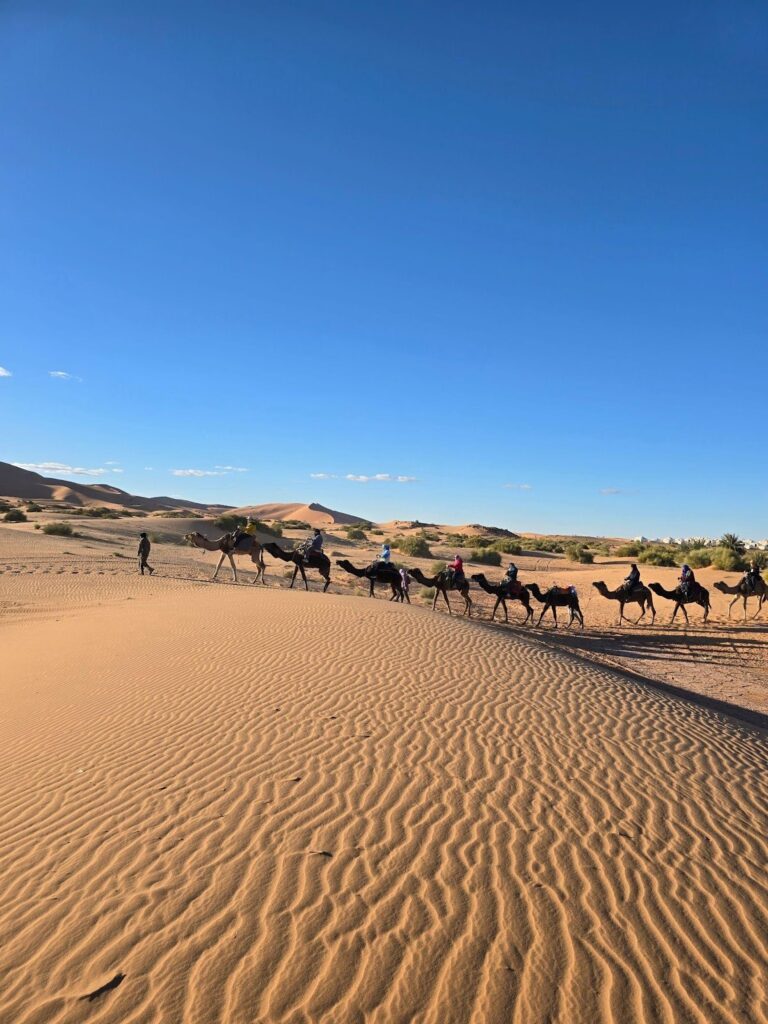
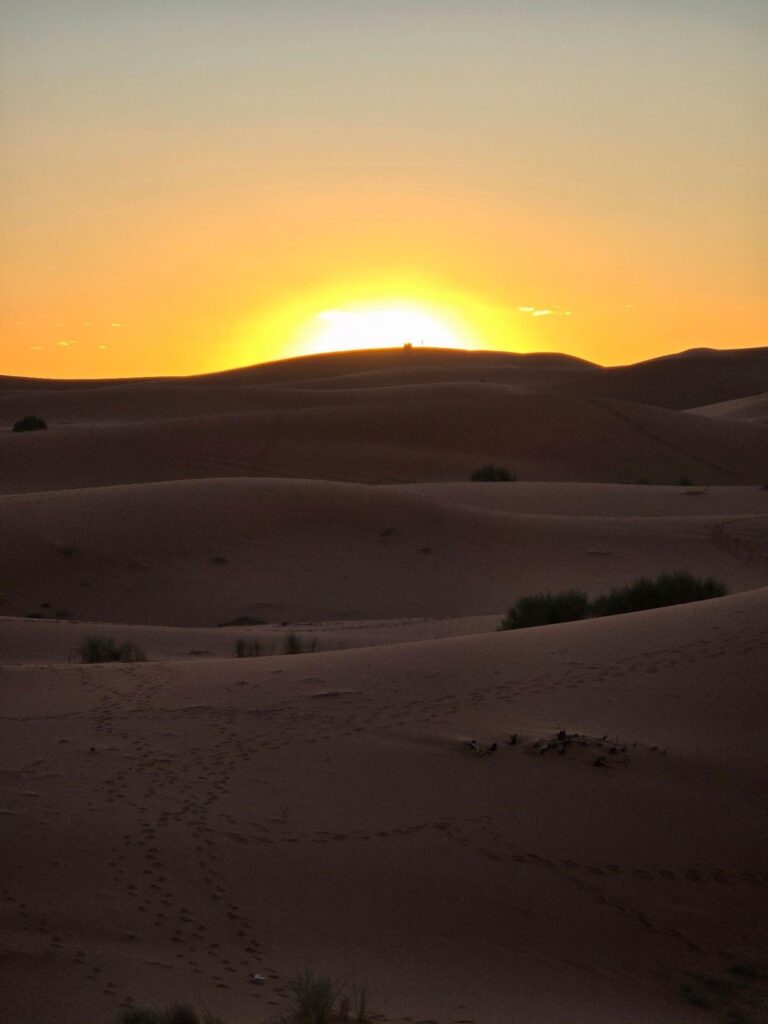
The first view of golden ridges rising from flat terrain often feels sudden. Camel trekking typically begins in the late afternoon to align with sunset, when light softens and temperatures cool.
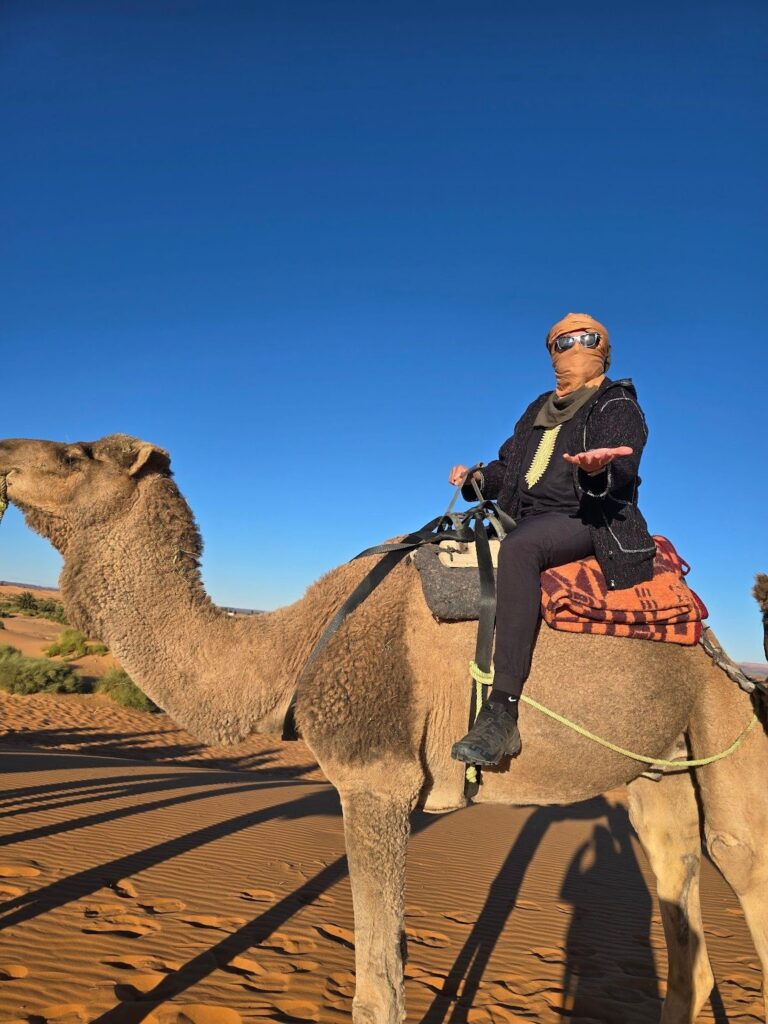
After brief instruction, travellers set off in a steady line toward the dunes. The movement is calm and measured. Unlike a Mount Toubkal climb, camel trekking does not require physical endurance. It shifts focus to scale, silence, and changing light.
As the sun lowers, the difference between Marrakech and the Sahara becomes fully apparent. Sound fades. The landscape simplifies. The journey from market to dune reaches its most distinct contrast.
Camp and Desert Evenings
Most treks conclude at a camp positioned among the dunes. Accommodation ranges from traditional tents to more comfortable setups, depending on the tour structure.
Evenings in the desert typically include a shared meal under open skies, featuring elements of traditional Moroccan cuisine such as tagine, seasonal salads, fresh bread, and couscous, a dish recognized by UNESCO as part of North Africa’s intangible cultural heritage. The meal becomes part of the atmosphere rather than a separate event, reinforcing the slower rhythm of desert travel.
Sunrise the following morning often becomes a highlight. Overnight wind reshapes the dunes, and early light reinforces the sense of distance from urban life.
Structuring the Experience
Camel trekking from Marrakech works best when integrated thoughtfully into a broader itinerary. Compressing mountain trekking and long desert drives into a tight schedule reduces the impact of both environments.
Travellers pairing the dunes with trekking benefit from pacing that allows recovery between active days and travel time. The transition should feel progressive rather than abrupt.
Group size also shapes the experience. Smaller groups allow for flexible stops, smoother logistics, and a more relaxed arrival at camp. When structured well, the route from the city to the Sahara feels intentional rather than hurried.
From Market to Dune
Camel trekking from Marrakech is defined by movement across environments. It begins among city markets, crosses the Atlas Mountains, and ends among dunes shaped by wind and time.
For travellers seeking depth rather than speed, the journey itself becomes part of the reward.
Those combining Trekking in Morocco, with a desert experience, benefit from experienced local coordination. Omar Adventures designs itineraries that balance driving time, mountain transitions, and desert immersion, ensuring the progression from city to dune feels seamless and well-paced.
Travellers ready to experience the route from Marrakech to the Sahara can reach out to Omar Adventures directly to plan a camel trekking journey structured around their wider adventure goals.
About the Author
Amira Haddad is a North Africa–based travel researcher and route designer specializing in mountain-to-desert itineraries across Morocco. Her work focuses on pacing, cultural depth, and the structure behind well-designed small group journeys through the Atlas Mountains and the Sahara.


